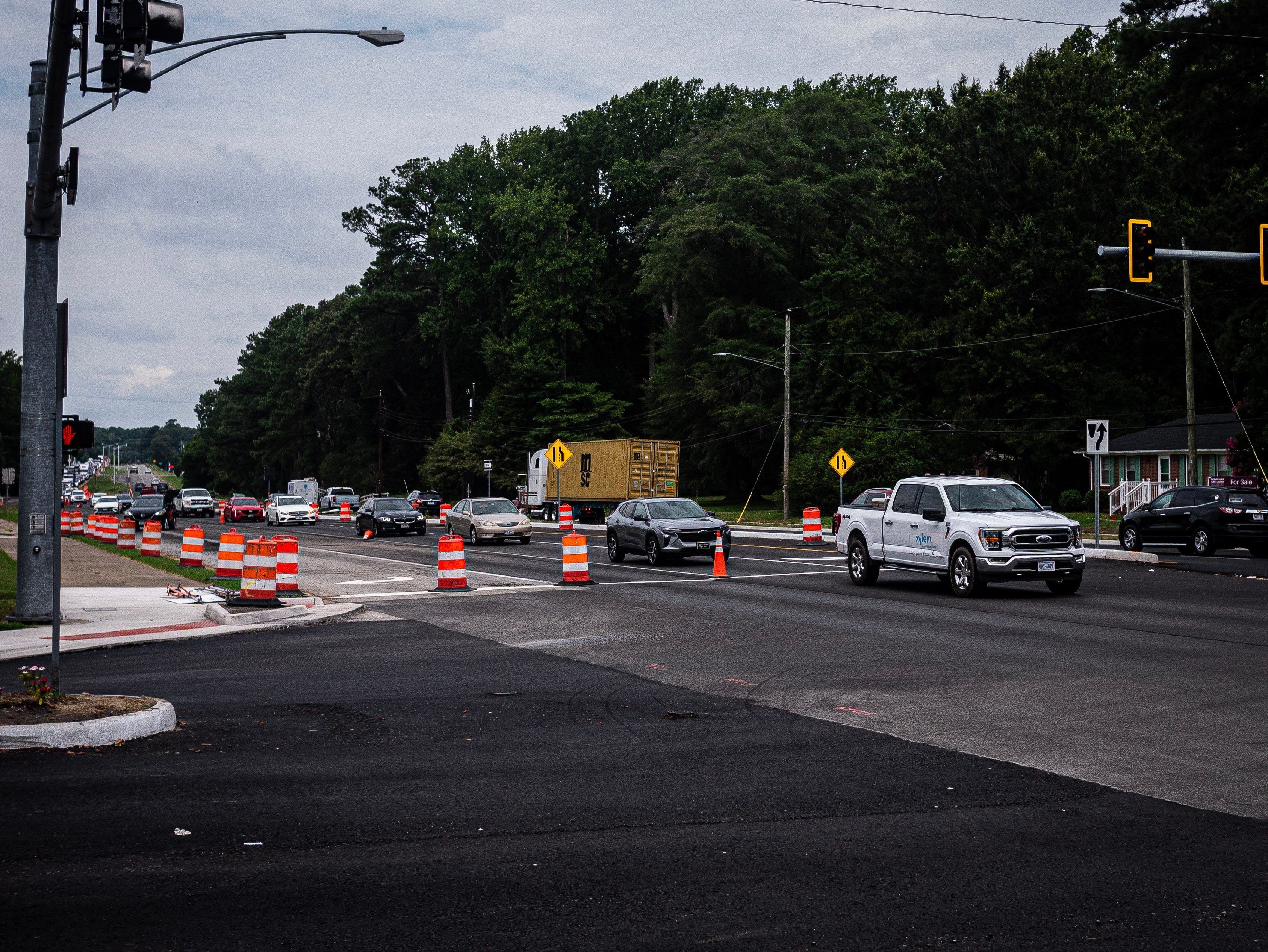
Suffolk has again announced a number of new infrastructure projects to improve the roads and traffic flow in the city. People who are concerned about traffic should rejoice! Obviously, though, that isn’t going to happen. Having lots of road work done at the same time will, of course, make traffic worse for a time, and people are already making their annoyance known.
If you find yourself in these places online where people in Suffolk complain about every decision made by city council, you’ll find two extremely common opinions about road improvement, often held by the same people. The first opinion is:
The city should have done this years ago and historically has never completed work fast enough to make any difference.
The second opinion is:
The city should not be doing all of this work at the same time because it will cause more traffic in the short term.
These two views are difficult to reconcile but are often both held by the same people. To be clear, both of these views can be seen as correct in isolation. It is true that the city has historically not managed to keep up with necessary infrastructure. It is true that doing all of this work at the same time will cause more traffic. But to both argue that the city needs to speed up its work while also arguing that it should not make up for a decade of unmanaged growth does not make sense. If the city does these projects more slowly, upgrading only one or two roads a year, ten years from now we’ll still be saying the same thing: the needed infrastructure improvements should have been done ten years ago but were put off.
The reasons often given publicly for opposing local development are not always the primary motivations. A substantial body of research on NIMBYism finds that opposition frequently reflects concerns about preserving property values, neighborhood exclusivity, and the demographic composition of communities, even when public arguments instead emphasize traffic, infrastructure, aesthetics, or neighborhood character. For more on this, read Neighborhood Defenders: Participatory Politics and America’s Housing Crisis by Einstein, Glick, and Palmer.
I don’t mean to say here that every resident complaining about infrastructure development has hidden motives. Most people are frustrated by traffic. But it’s hard not to acknowledge the pattern identified in NIMBY research: opposition to development and infrastructure often exists even when the long-term benefits are well documented. And if every project is delayed to alleviate short-term inconvenience, the result can be higher housing costs, reduced racial integration, and less housing available to young and working-class families.
The reality is that there is no version of infrastructure investment that doesn’t involve temporary inconvenience. Roads cannot be widened without lane closures. Intersections cannot be redesigned without detours. Utilities cannot be upgraded without construction. The choice is not between traffic and no traffic. The choice is between accepting short-term disruption now or accepting worsening congestion for years to come.
Suffolk is one of the fastest-growing cities in Virginia. Whether someone supports additional growth or not, thousands of people have already moved here and thousands more will continue to do so. The infrastructure serving Suffolk has to reflect that reality. Refusing to improve roads will not address this. We’ll just end up with a city that has experienced decades of population growth but still relies on infrastructure that cannot adequately support it.
Good infrastructure is one of those things people rarely notice. When I drive down the upgraded parts of I-64 between Suffolk and Chesapeake, I hardly remember the days of torn-up roads, orange barrels, and constant construction and traffic because it is so much easier to travel that road today. The temporary pain of traffic, in the long term, helps buy us a city that is easy to travel through and live in, and that is affordable and open to anyone who wants to live here.